Commercial hand dryers are certified to dry hands in seconds, to be hygienic, and to save energy. Eleven journal preprints and a federal civil complaint now document that they do none of these things. Most of those claims are verifiable by anyone, in minutes, without instruments or expertise.
- Every hand dryer failed to dry hands in the time claimed — by a factor of eight to ten.
- Every hand dryer demands eight to ten times more energy than claimed.
- Every hand dryer grew mold beneath it. All of them.
- Every hand dryer amplified airborne contamination in the room. Median 110×.
Test it yourself
Visit any public restroom with a certified electric hand dryer. Wash your hands. Hold them under the dryer for fifteen seconds — longer than any claimed drying time. Then observe three things:
- Watch where the water goes as it leaves your hands.
- Remove your hands at fifteen seconds. They are visibly, obviously wet.
- Look at the wall and floor beneath the air outlet. Note the mold, dirt, and water staining spreading from that point.
The hypothetical
The simplest way to understand a hand dryer is to imagine removing it from the room. Is the room more or less sanitary with it gone? Is a person who just washed their hands cleaner, or more contaminated, if it is not there? The answer is the whole case.
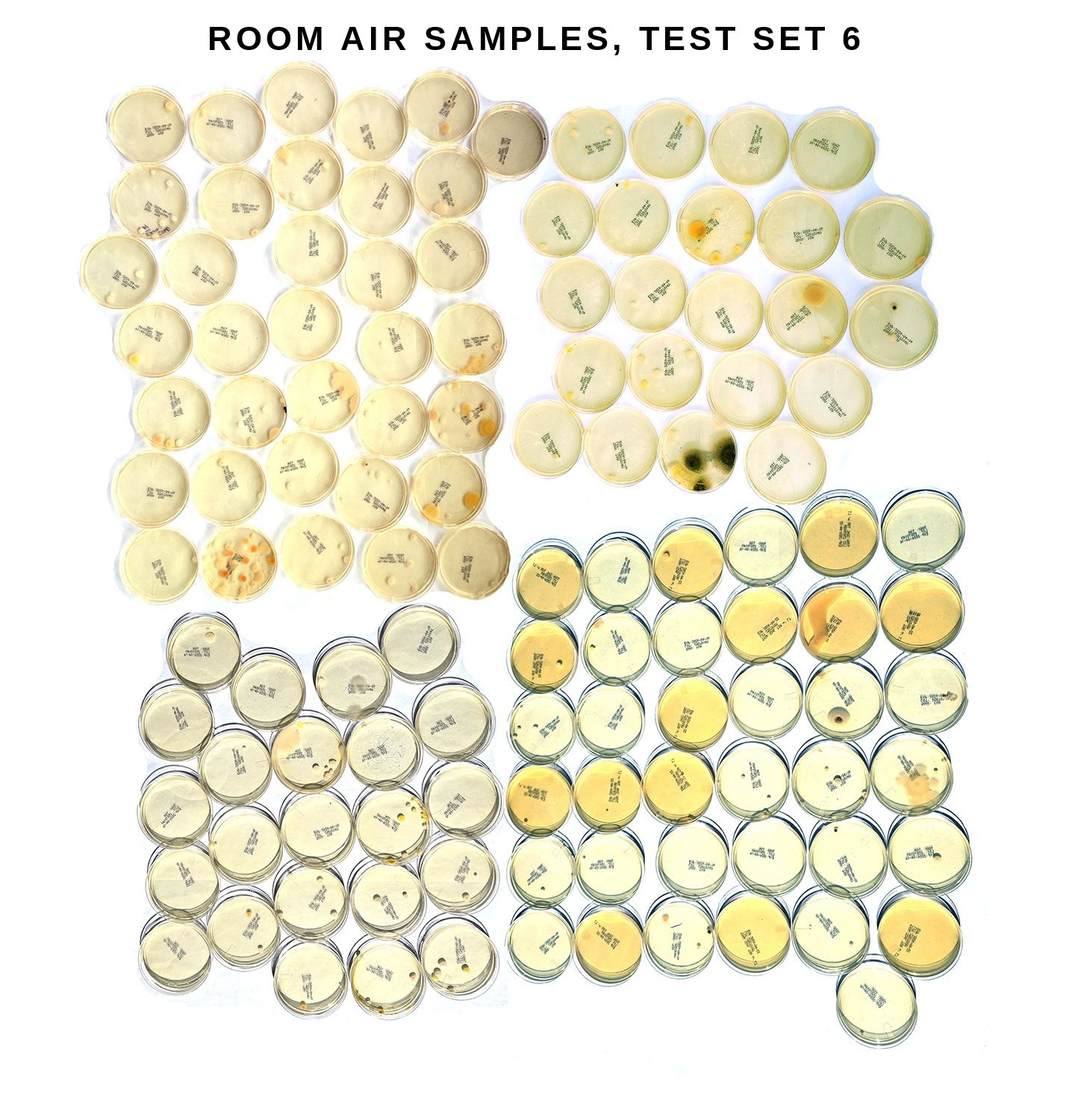 +Room air · 60 secondsClick image for detail
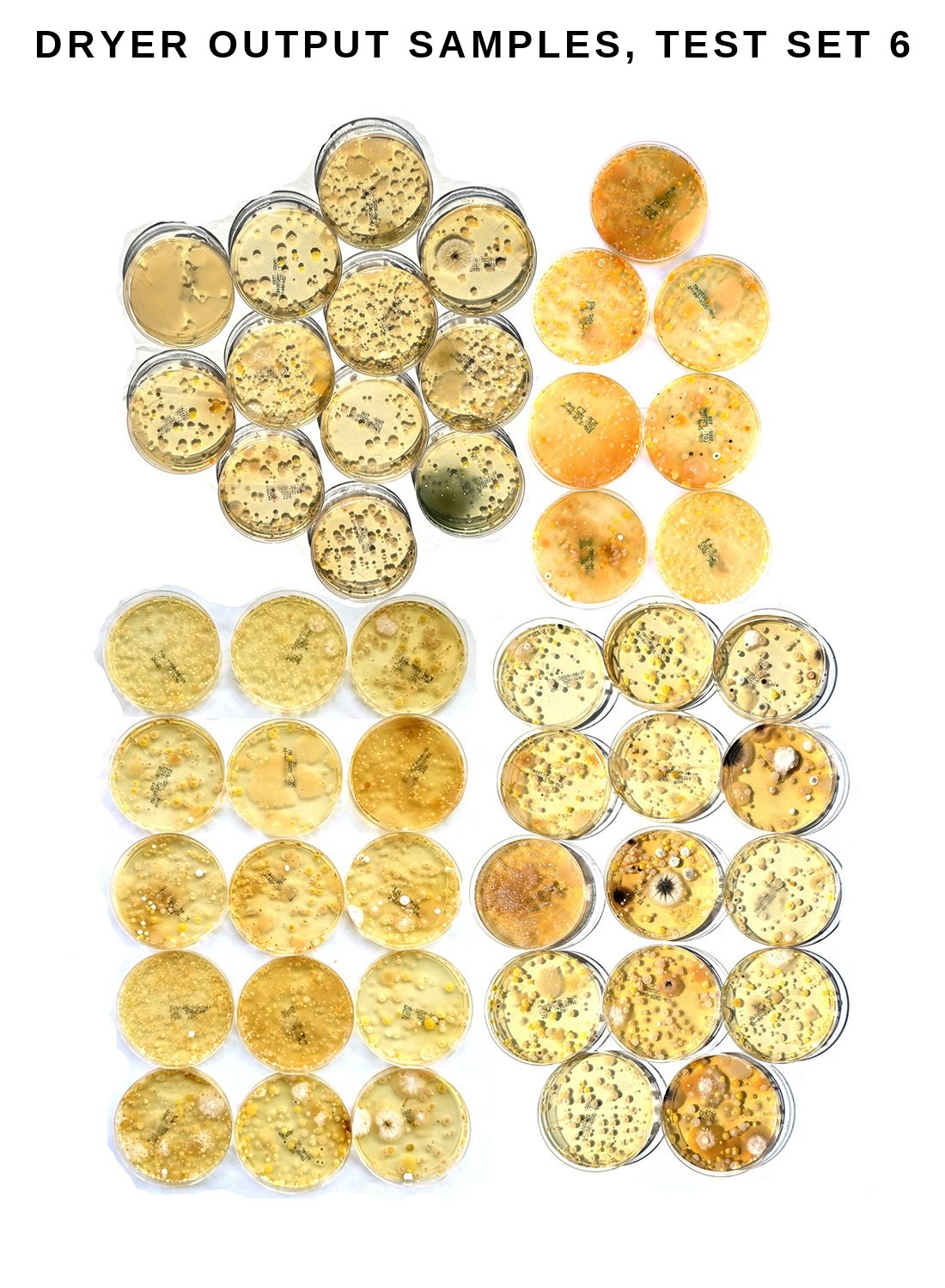 +Dryer output · 60 secondsClick image for detail
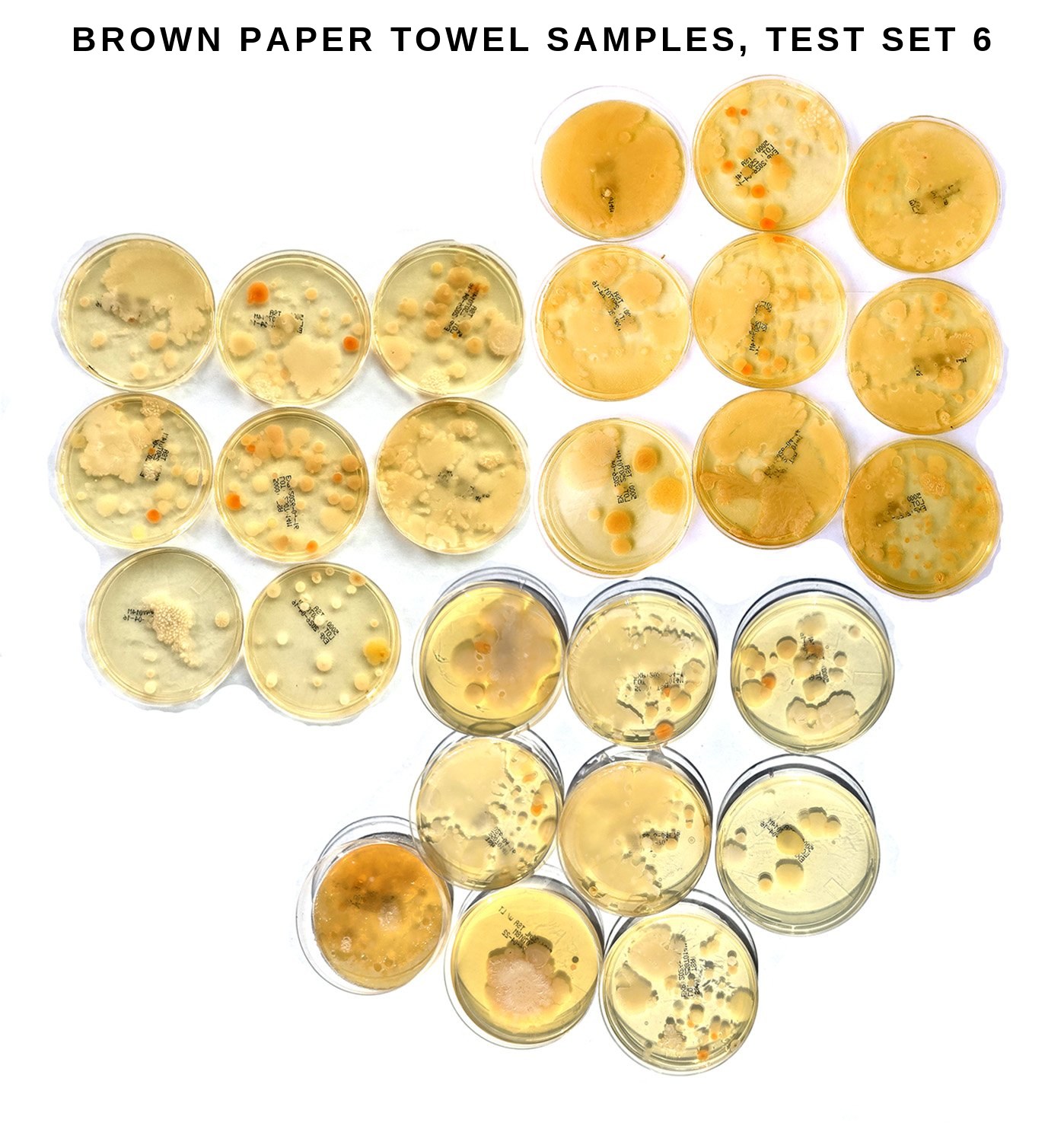 +Brown towel · 30 secondsClick image for detail
+Room air · 60 secondsClick image for detail
+Dryer output · 60 secondsClick image for detail
+Brown towel · 30 secondsClick image for detail
+Room air · 60 secondsClick image for detail
+Dryer output · 60 secondsClick image for detail
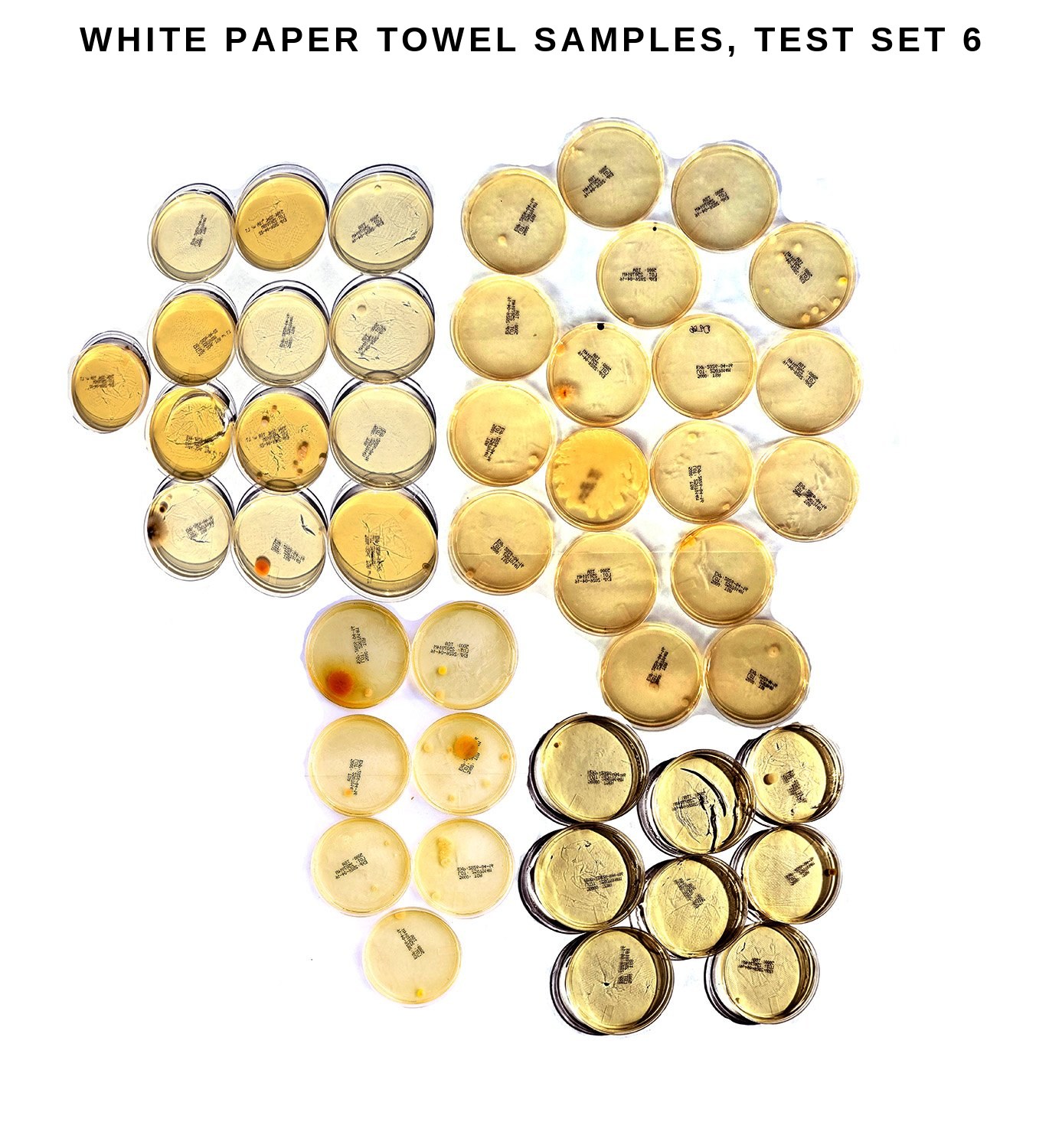 +White towel · 30 secondsClick image for detail
These six petri dishes display a unique finding. Each set, top and bottom, came from a public restroom that had a hand dryer next to a paper towel dispenser in the same room, in the same restroom air. Brown paper towels on top. White paper towels below. Every test set in the 353 microbial content series of tests — 1,076 culture dishes across 226 unique restrooms — is functionally identical. www.handdryerstudy.com
Read the evidence yourself
Nothing here asks for belief. The complete record is published as primary-source documents — the science, the complaints, and the films. Read them and decide.
What the research found
Across roughly two and a half years — 169 distinct hand dryers, 462 drying trials, 353 contamination tests, 226 unique restrooms examined, and approximately 50,000 bacterial and fungal colonies counted by hand — the findings were consistent, statistically overwhelming, and reproducible across every manufacturer tested.
They do not dry hands.
Certified to reach a dry-hands threshold in eight to fifteen seconds. Across 462 trials, zero met it. Real drying takes seventy to ninety seconds — false by a full order of magnitude. Every downstream energy and environmental claim rests on this number.
They amplify what washing removed.
Dryer output air carries bacteria and fungi at fifty to one hundred ten times the concentration of ambient room air — and far higher in the extremes. Products certified as "hygienic" spray amplified contamination onto freshly washed hands.
The water goes everywhere.
Roughly 7.3 grams of indeterminate wash water is stripped from the hands at hurricane-force air speeds and thrown onto the walls, floor, and the user. No certification standard addresses where that water goes.
Mold forms in every installation.
Visible mold colonized the wall and surfaces beneath the air outlet in 100% of installations examined — varying only by how often each facility cleans it away.
The green claim is inverted.
Because the energy math depends on a false drying time, dryers consume far more energy and produce far more CO₂ per use than claimed. The marketed environmental advantage over paper towels does not exist.
The standards certify the opposite of the truth.
The foundational standard was written around a hand dryer no longer sold, never rewritten for the machines now in every restroom, and certified by bodies that excluded the very performance — drying, hygiene, water — the products exist to deliver.
The irreconcilable conflict
The research results and the manufacturers' and certifiers' claims cannot both be true. Our science presents the arguments and our complaints bind it to law as we understand it. The courts will decide.
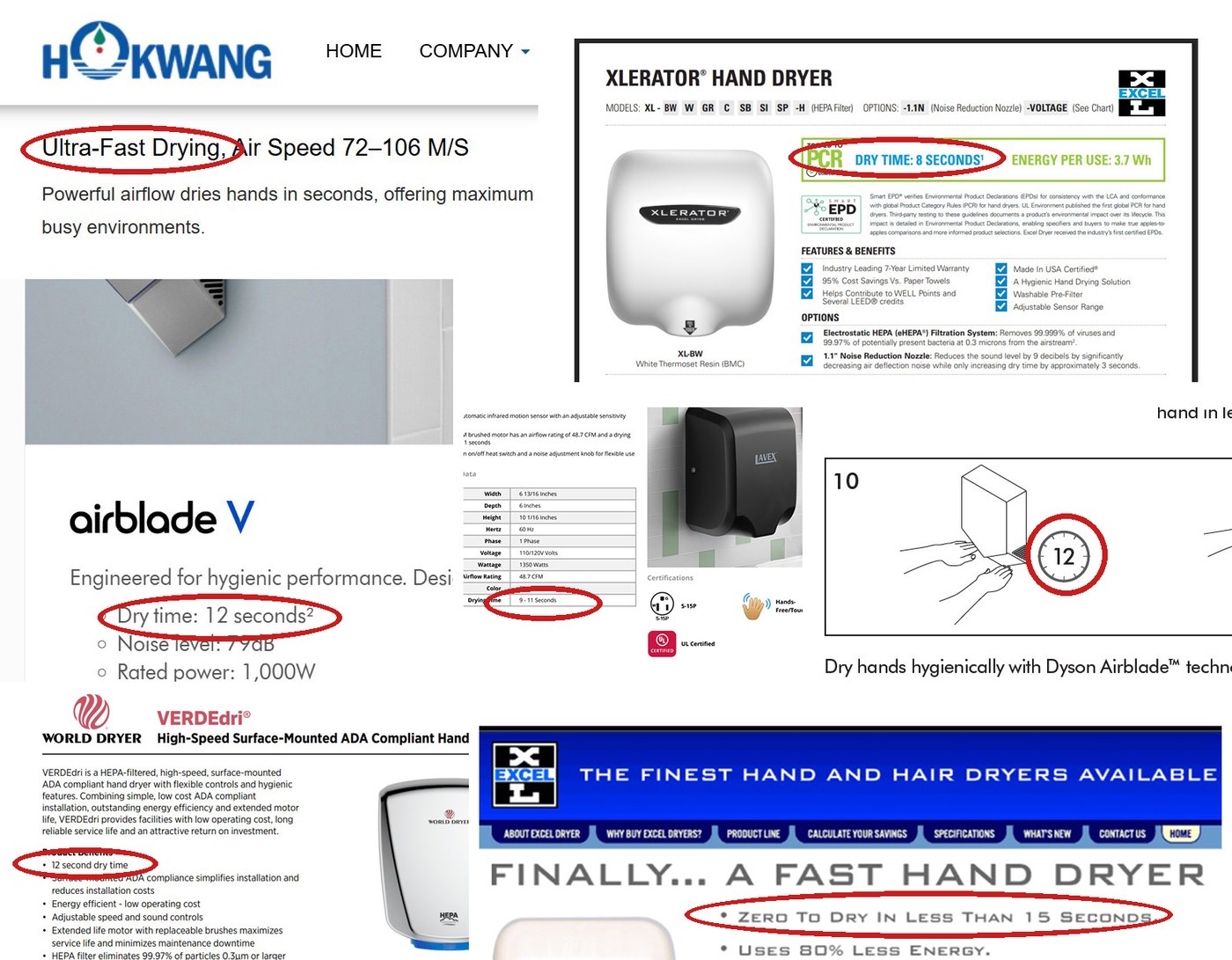
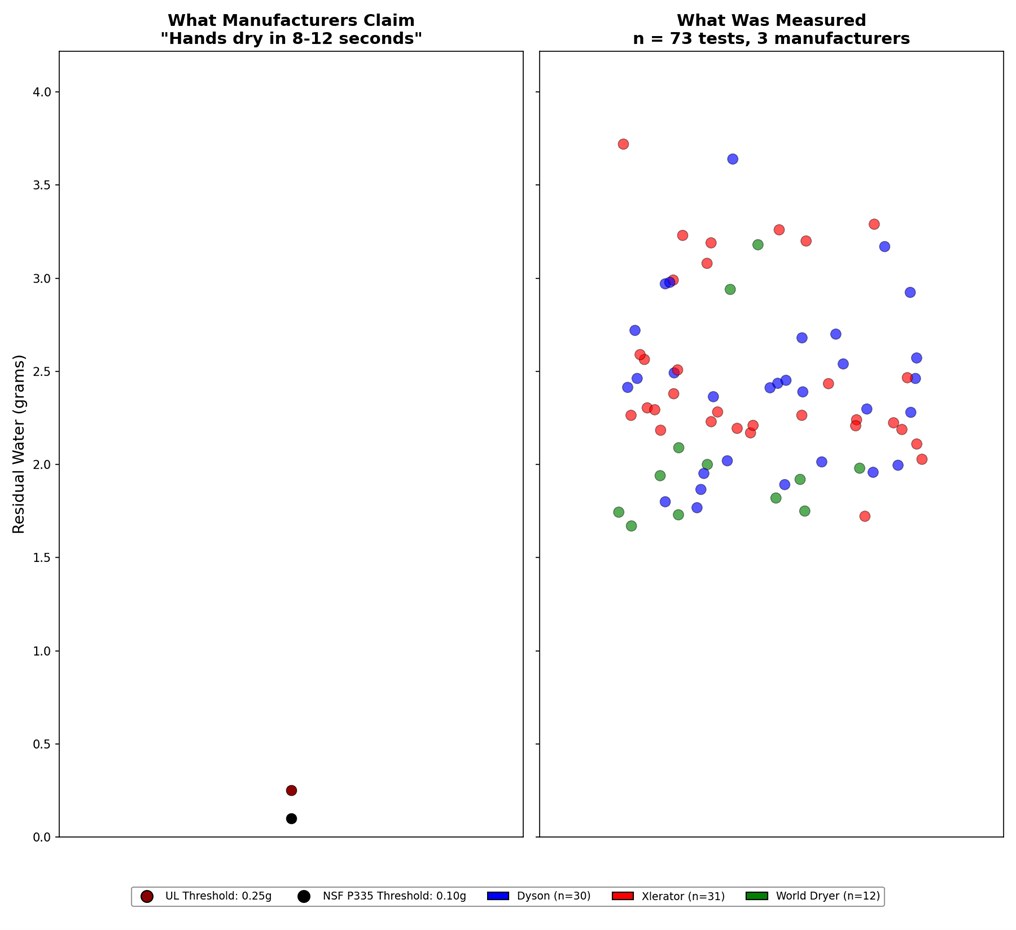
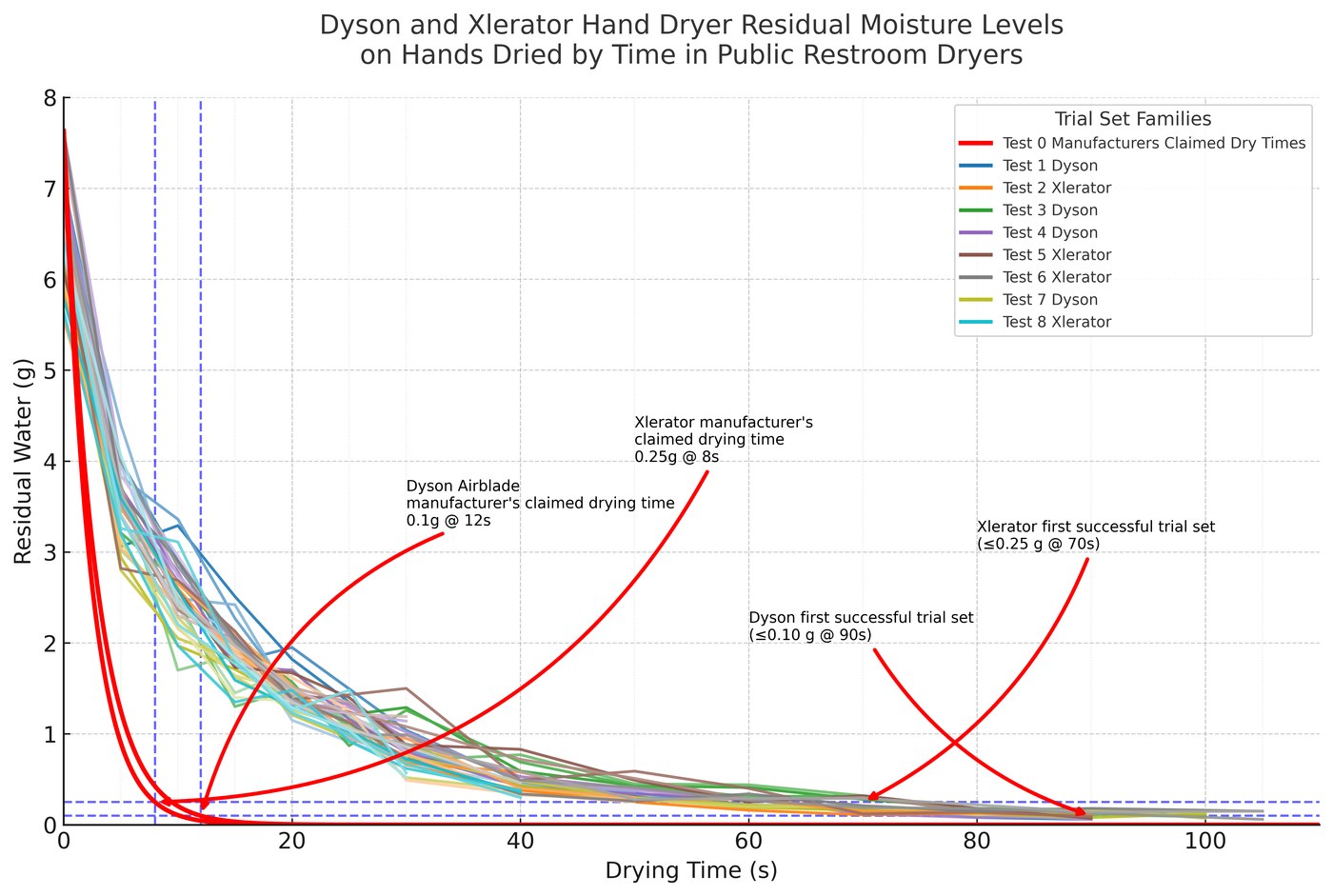
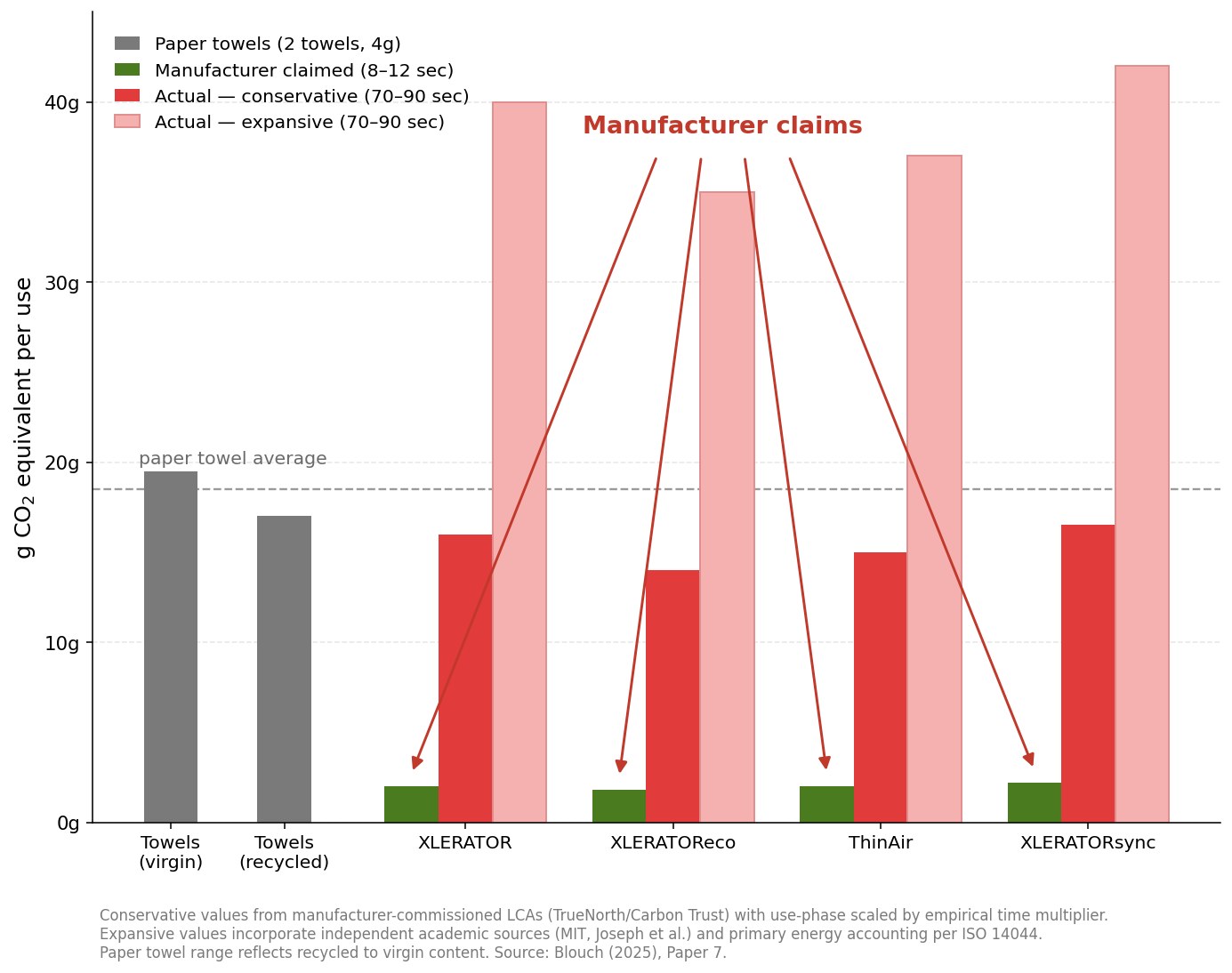
Manufacturers and the companies that test and certify hand dryers claim hands dry in eight to fifteen seconds. Across 462 measured trials, every downdraft dryer failed residual water tests at the claimed time by about 2000%. Actual time to dry is 70–90 seconds, eight to ten times longer than claimed, visible in the time chart and animation above.1 All published and certified energy and environmental claims are therefore off by a factor of eight to ten, making hand dryers equivalent or worse than paper towels if they are used to dry hands to the manufacturers specified dryness.2 Full data in the published studies.